

My review of the disappointing 0-0 draw with Hibs on Sunday was shelved upon learning yesterday about the sad passing of our beloved former manager and captain Billy McNeill.
Any sort of criticism of the team and talk of who should be in the hot seat next season paled into significance beside the loss of such a mythical and heroic figure to Celtic fans the world over.
Quite simply Billy McNeill was Celtic and always will be.
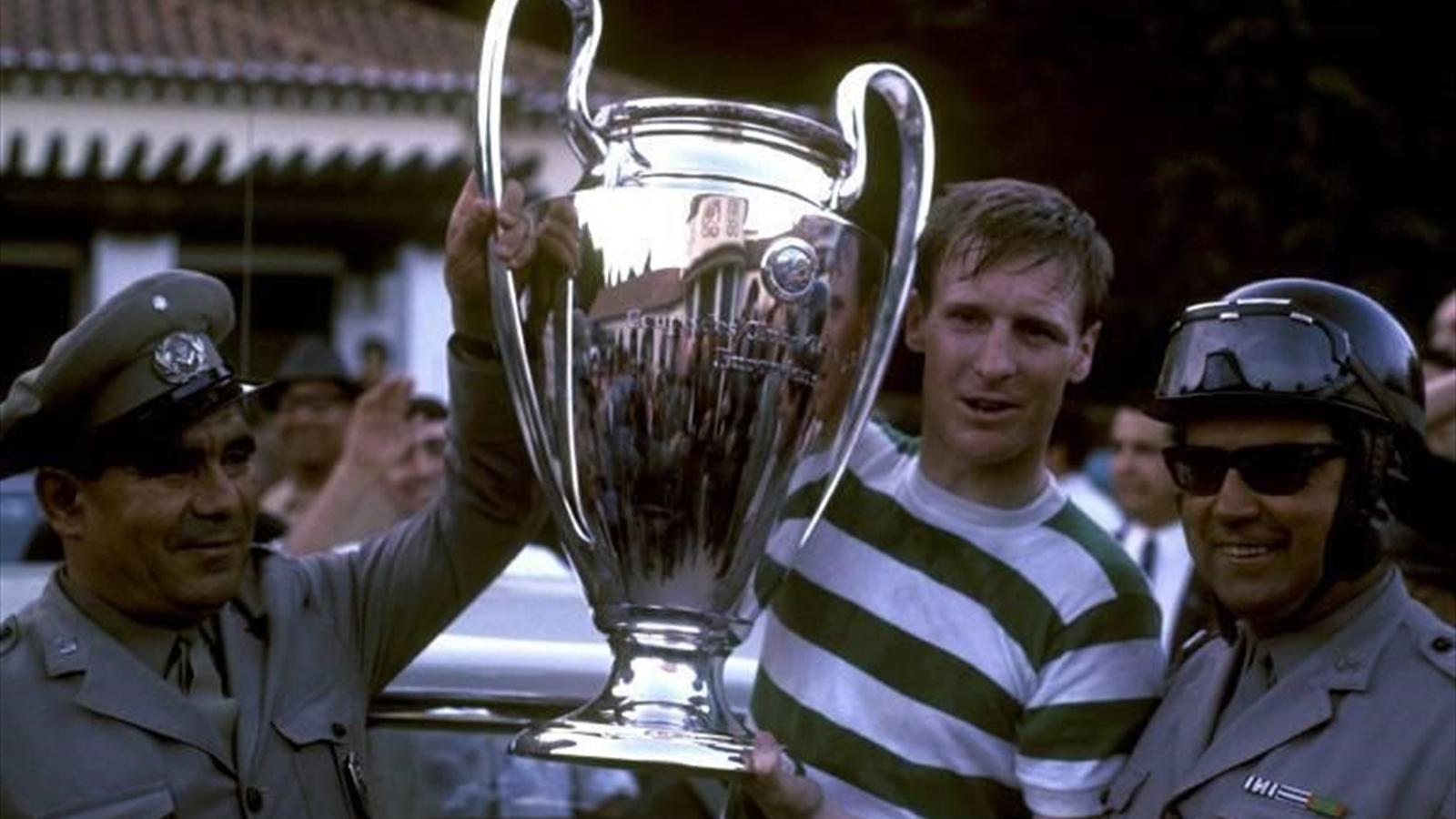
Born in Bellshill on March 2nd 1940 he was signed by Celtic from a local Junior side Blantyre Victoria on 20 August 1957 and so began a love affair with his boyhood heroes that would last the rest of his life.
Aged 18 he made his debut against Clyde on the 23rd of August 1958 at Celtic Park in a League Cup game in which Celtic triumphed 2-0 but incredibly it wouldn’t be until 1965 that he picked up his first piece of silverware when under the tutelage of new manager Jock Stein, Celtic, captained by Billy, defeated Dunfermline Athletic in front of a crowd of 109,000 at Hampden Park to claim the Scottish Cup. Billy himself headed the winner with only eight minutes to go and this heralded in the greatest period in the clubs history.
With Jock as manager and Billy as captain Celtic went onto capture an incredible nine consecutive Scottish League Championships, seven Scottish Cups, and six Scottish League Cups. That emphatic trophy haul though was trumped on a magical day in May 1967 when Billy held aloft the European Cup in Lisbon after captaining the team to an incredible and unexpected 2-1 win over Italian giants Iner Milan. He became the first British player to do so as well as being part of the first non-Latin team to win the competition which had since its inception been dominated by the powerhouses of Spain and Italy.
Nicknamed Cesar after the actor Cesar Romero – for the rather abstract reason that Romero played the getaway driver in the 1960 movie ‘Ocean’s 11′ and Billy was the only player at the club at the time to own a car – he was a tall and commanding central defender who was particularly effective in the air. Though Billy’s greatest talent was summed up by Jock Stein with the statement:
“What makes a great player? He’s the one who brings out the best in others. When I am saying that I’m talking about Billy McNeill.”
He left the club as a player after captaining us to another trophy and it was fitting it would come in a Scottish Cup final via a 3-1 win over Airdrie on May 3rd 1975. Both Paul Wilson (2) and Pat McCluskey got the goals that day in front of 75,000 fans but it was Billy who’s name everyone would sing as he pulled on the Hoops one last time.

Rather scandalously Billy only got 29 caps for Scotland though of course, he wasn’t the only Celtic player to be neglected by the national set-up at that time despite playing for the dominant domestic team as well as one of the top sides in Europe.
A one-club man as a player Billy took a few years out of the game after finishing with Celtic before returning in 1977 to briefly manage Clyde to a mid-table finish in the old Division Two. He then replaced the incumbent Scotland manager Ally MacLeod at Aberdeen at the beginning of the 1977/78 season and led the club to a second place finish, just two points behind champions Rangers. They also lost out in the Scottish Cup final 2-1 to Rangers but the foundations for success had been well and truly laid by Billy for his replacement Alex Ferguson who went onto lead the North East club to unprecedented glory from the late ’70s through to the mid-’80s.
Of course, there was only one job Billy would leave for and that was back at his beloved Parkhead after the legendary Jock Stein stepped down on the back of a poor campaign. In his first term as manager, Billy led Celtic back to the title as they defeated defending champions Rangers 4-2 at Celtic Park on the final day of the season despite Johnny Doyle being handed an early red card. The match will forever be known as ’10 Men Won the League’ and remains an iconic moment in the clubs history.
In his five years in the Celtic Park hot seat, Cesar won three league championships, one Scottish Cup and one League Cup despite being faced with not only the standard titanic Old Firm rivalry but ferocious competition from the emerging ‘New Firm’ under the guidance of legendary figures Alex Ferguson – his successor at Aberdeen – and Jim McLean at Dundee Utd.
He developed the precocious talents of Paul McStay and Charlie Nicholas and signed players of the calibre of Davie Provan, Murdo MacLeod and Brian McClair all of whom would make enormous contributions to the club.
Billy left after a fallout with the board mainly fueled by their lack of ambition and in particular the sale of Nicholas to Arsenal in 1983 and departed for down south where he took over at the ailing Manchester City who had just been relegated from the 1st Division. In his first season he guided them to 4th in the old Division 2, just one place outside of promotion, and in the second they did achieve third sport and with it a place back in the top flight.
After keeping them up Billy departed for another ailing giant Aston Villa but he proved unsuccessful in helping the Midlands club avoid relegation and left the English game for good after four years in 1987.
Within weeks of this though he was back at Celtic just in time to take charge of his beloved Bhoys in advance of the centenary 1987/88 campaign.
This was, of course, a vital season for Celtic with not only the 100 year anniversary but also reviving the clubs fortunes after a disappointing trophyless ’86/87 campaign and faced with a revitalised Rangers spending big under the management of Graeme Souness.
Billy drafted in Billy Stark, Mick McCarthy, Andy Walker, Joe Miller, Chris Morris and Frank McAvennie and Celtic had a magnificent season that saw them win the league by 10 points suffering only three defeats in a mammoth 44 game league campaign, not losing a game to Rangers in the process.
This was all topped off by an incredible Scottish Cup triumph with Celtic leaving it late in both the semi-final against Hearts and then the final itself against Dundee Utd via last gasp 2-1 victories to secure a dramatic and legendary double marking the clubs centenary in style.
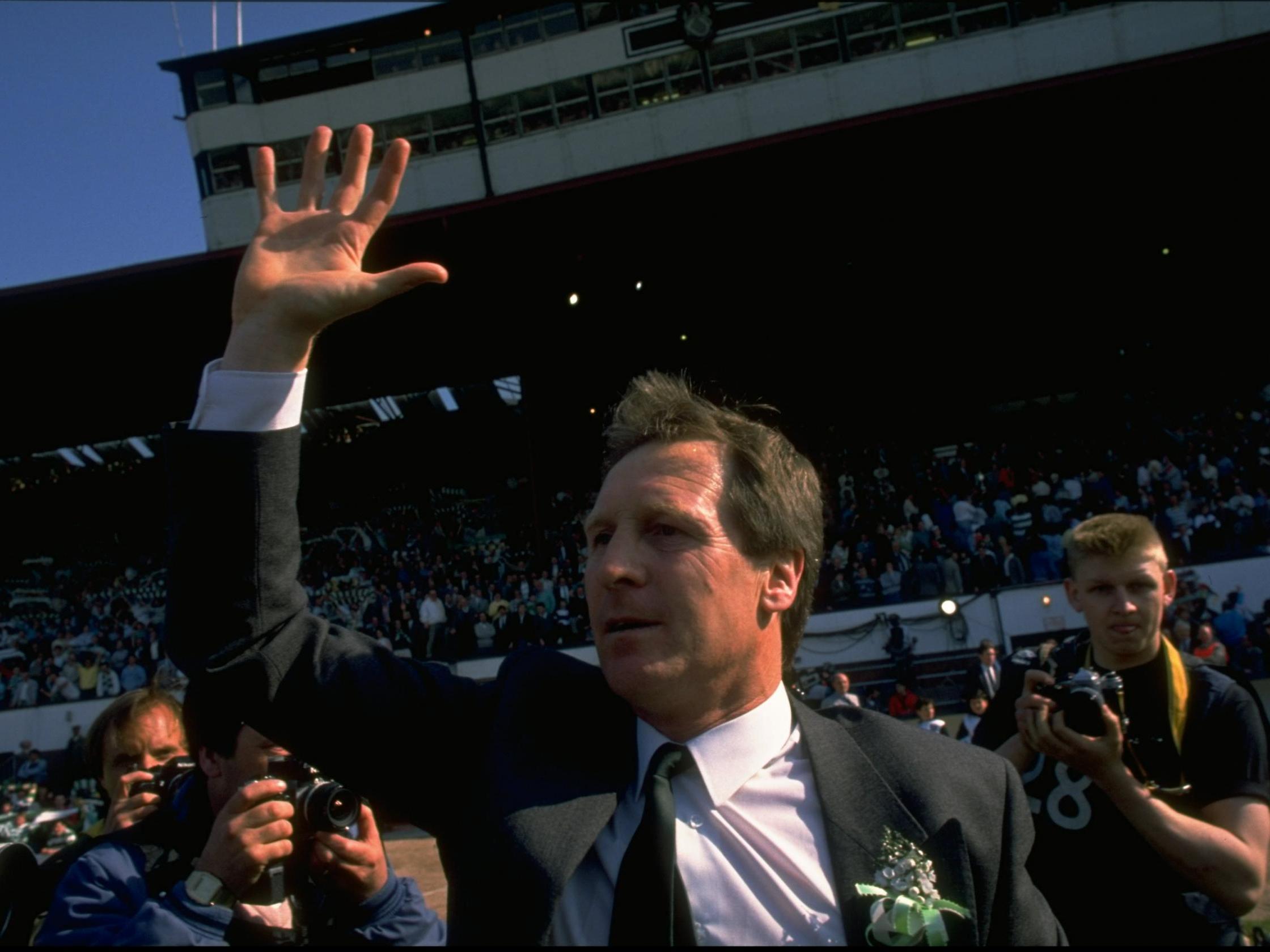
Despite stopping Rangers winning the treble with a 1-0 win against them in the 1989 Scottish Cup final at Hampden Billy’s final years in charge saw diminishing returns as Rangers and even Aberdeen spent big and left Celtic trailing.
My earliest memory of being at Celtic Park was seeing the players hold aloft the league trophy in 1988 after defeating Dundee but the first match that really got my attention as a kid was the 1990 Scottish Cup final against Aberdeen. Celtic lost 9-8 on penalties that day at Hampden and the drama of it all gripped me. I departed Hampden finally ‘getting it’ so to speak in regards to what all this meant to people. Hearing Billy’s pained words over the radio in the post-match interview as my dad drove us both up the road on a fine sunny day gave me an insight even back then at such a young age as to his passion for the club. Billy was a supporter first and foremost just like us and Celtic truly was in his blood.
The following season was another disappointing one with a third consecutive poor league campaign (3rd,5th & 3rd) as Rangers took all three titles as well as suffering more misery at Hampden as we fell 2-1 to our Glasgow rivals in the League Cup final – again I was there for that one – and then we came unstuck in the Scottish Cup semi-final. The competition had proven to be the clubs salvation in the previous two campaigns and there was the highlight of eliminating Rangers at the quarter-final stage 2-0 in the ‘St. Patrick’s Day Massacre’ which saw three Rangers players red-carded. However, after a disappointing goalless semi-final draw, Celtic were downed 4-2 by Motherwell in the replay despite being ahead twice in the encounter.
Rumours circulated almost immediately about Billy’s future in the hot seat and even though we went onto win the final four matches of the league campaign Cesar was relieved of his duties in May 1991. Billy remained angry for years after about how it had all been handled by the then chief executive, the controversial and pugnacious Terry Cassidy.
It was only right that such a bitter taste be relieved by appointing him official club ambassador in 2009 and then unveiling a statue in his honour in 2015.
In 2010 Billy was diagnosed with dementia and progressively retreated from public life. He officially revealed his illness two years ago with his health visibly diminished.
Last September Celtic bid farewell to another great son in Jim Brogan who I was lucky enough to know personally and who was also afflicted by a dementia-related illness. It’s a terrible disease that scrapes away at an individual’s identity. Thankfully Billy like Jim was surrounded by his family at the end and his suffering is now at an end.
Whilst the statue close to the stadium will forever stand testament to his glory for me its the memories of Billy McNeill that will prevail. The footage of him angrily demanding the players to ‘get back’ in the aftermath of the late winning goal in the infamous 1980 cup final against Rangers. His passionate and vivacious celebrations after the cup final wins in 1988 and 1989. The shrug of the shoulders after the top of the Scottish Cup came off when Billy held it aloft in his final game in 1975.
But of course, all are put in the shade by that iconic moment when lions roared and he lifted the European Cup in 1967 and quite literally became immortal. Etched in the memories of every Celtic supporter the world over.
Rest in peace Billy McNeill. He played 789 games for Celtic, scored 37 goals and managed us for 455 games winning 31 major honours overall.
Hail Cesar……our greatest ever captain and servant.
| ‘If ever a man was made for a specific club, it was Billy McNeill and Glasgow Celtic…. His heart was always at Parkhead.’ Peter Swales (Chairman of Man City 1989) |

 ....Always A Tim!